Your First Indoor Volleyball Match: Follow the Rotation
Follow rotation in your first indoor volleyball match: see who serves next, how players shift around the court and what each change means.
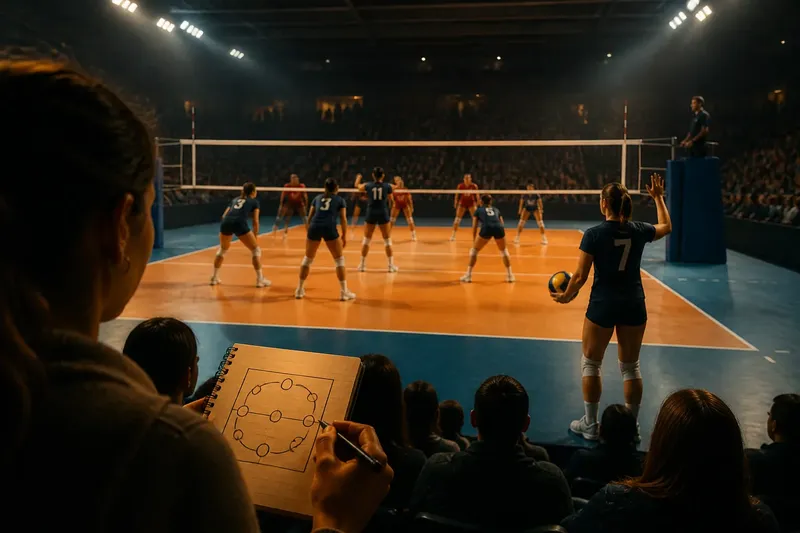
You settle into the stands just as a whistle sends the ball across the net, and the players on one side seem to trade places before the next serve. In your first indoor volleyball match, rotation is a simple thread to follow: notice who wins the right to serve, then watch how that team changes its court arrangement.
You do not need to memorise every position to see the pattern. The useful question is whether the team is receiving serve or has just won the right to serve, because that tells you whether a rotation happens and which player moves into the service spot.
Start with the team that has just won the rally
In indoor volleyball, the team that wins a rally earns a point. If the team that was receiving serve wins that rally, it also gains the right to serve. Before its next service, its players rotate one place clockwise around their positions.
The player moving from the back-right position goes to serve. The other five players move one position with that same clockwise change: front-row players shift along the net, while back-row players shift behind them. The team that was already serving does not rotate just because it wins another rally.
That distinction is the heart of the viewing rule. A point alone does not mean both teams rotate; a change of service possession is the cue. If the serving team wins, it keeps serving from the same rotational order. If the receiving team wins, look for the new server and the accompanying shift.
Choose your viewing approach by what you want to notice
If you are new to the sport, follow the next server. This is the easiest option because the service position is visible at the back-right corner. When the receiving team wins a rally, identify the player who arrives there; that player is due to serve next. It gives you a clear point of reference without asking you to track all six players.
If you want to understand the court arrangement, follow one player’s route. Pick a player whose number you can recognise, then watch where they move after their team wins the right to serve. Their route helps reveal the clockwise pattern: a player at the front moves to another front-row place, while a back-row player moves around the back. This suits a spectator who enjoys seeing the structure change rather than simply counting serves.
If the team is receiving serve, watch the shape before the whistle. Players may stand in a formation that helps them receive the ball, and their starting spots still reflect the rotation order. After the serve, they can move into their preferred playing roles. The rotation sets the required order at the moment of service; it does not mean every player stays in that spot throughout the rally.
If the same side keeps serving, expect no new rotation. The server may change only after the other team wins a rally and takes service. This is helpful if the match feels fast: instead of looking for constant movement between points, wait for a change in who serves. That is when the rotational order advances.
If you are watching a team with a specialist libero, keep your attention on the six-player order. A libero is a defensive specialist with replacement rules, so their appearances can make the visible line-up look less straightforward. For a first viewing, you can set those substitutions aside and track the player who serves and the six positions in the rotational order.
See the rotation without confusing it with tactical movement
Rotation and playing role are related, but they are not the same thing. A setter, for example, may move towards a setting position once the serve is in play, while the rotation records where that player belongs in the order. Likewise, attackers and blockers may move to prepare for the rally.
Say you are watching a team receive serve, and a player begins near the net but moves back after the ball is served. That movement may be part of the team’s playing plan, not a rotation. The observable clue is timing: rotation happens before the serve when service changes; tactical movement happens as the rally gets under way. This distinction lets you follow the rules without mistaking every shuffle for a new position.
Imagine the receiving team wins a rally while its back-right player is number seven. Number seven moves to serve, and the team shifts clockwise in its order. If that team then wins the next rally while serving, number seven serves again; there is no second rotation. The expected result is easy to watch: a new server appears only after the opponents take a point and service.
Use the scoreboard and court to confirm your reading
The scoreboard helps you spot the point at which service changes, but the players confirm what happens next. Watch which side receives the next serve, then look to its back-right position before the whistle. The score tells you who won the rally; the court shows you the rotation.
For a clear view, choose a seat where you can see both back corners and the area near the net. If you lose track during a long rally or a substitution, reset your attention at the next service: identify the serving side and the player in the service position. There is no need to reconstruct every movement you missed.
It is not worth trying to memorise the whole line-up in the opening moments. A single anchor—the next server—is more useful than a full roster in your head, and you can add a second player’s route once the rotation starts to feel familiar.
Which rotation questions matter during a match?
Does a team rotate after every point?
No. A team rotates when it wins a rally while receiving serve and takes the right to serve. If the serving team wins, it scores and serves again without rotating.
Which way do players rotate?
Players move one position clockwise when their team gains the right to serve from the receiving side. The player moving into the back-right position becomes the next server.
Do players stay in their rotational spots during the rally?
No. They may move into roles and positions that suit their team’s play after the serve. The rotation determines their order at service, while the rally brings movement for receiving, setting, attacking and defending.
What should I watch if I lose track?
Wait for the next serve, identify which team is serving, and find the player in the back-right service position. If the other team wins a rally and takes service, look for its new back-right player and the clockwise shift.
Keep one simple question in view
When the whistle pauses play, ask: did the receiving team just win the rally? If yes, expect it to rotate and send its back-right player to serve. If not, the current serving team keeps its order. That small decision is enough to make the court’s changing arrangement legible, and it gives your first indoor volleyball match a pattern you can follow from one serve to the next.